
Adlega Blog:
-

Cost per Click (CPC)
What Is Cost per Click? Cost per Click (CPC) is a digital advertising model where you pay each time a user clicks on your ad . It’s like paying for each person who walks into your store, rather than for a billboard that everyone sees but few act on. How to Calculate CPC The basic…
-
Cost Per Lead (CPL): Formula, Benchmarks & vs CPA
Cost per lead (CPL) measures how much it costs to generate one lead. The formula is Total Marketing Spend ÷ Leads Generated. A healthy funnel keeps CPL < CPA < customer lifetime value.…
-
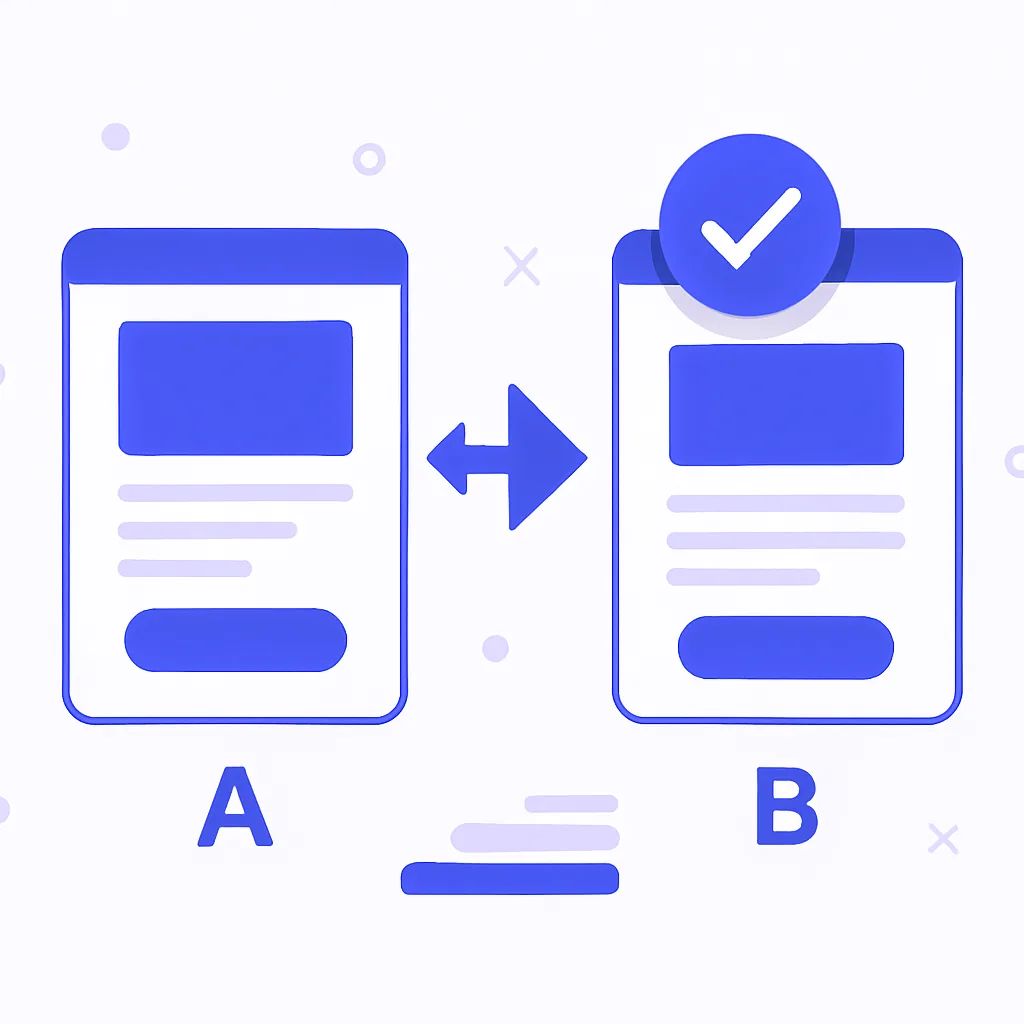
A/B Testing: How It Works, Metrics & Best Practices
A/B testing (split testing) compares two versions of a webpage, email, or asset to see which performs better. You change one element, split traffic randomly, and measure which version wins on a clear metric like conversion rate.…
-

Trial
What Is a Trial? In business, a trial is a period during which a potential customer can use a product or service, usually for free or at a reduced cost, before deciding whether to become a paying customer. Common Types of Trials Free trials : Full access for a limited time 🕒 Freemium : Basic…
-

Channel Sales
What Is Channel Sales? Channel sales is a distribution model where a company sells its products or services through third-party partners, rather than (or in addition to) selling directly to customers. These partners form the company’s “sales channel.” Key Players in Channel Sales Resellers: Businesses that buy and sell products 🏪 Distributors: Intermediaries managing logistics…
-

Email Marketing
What Is Email Marketing? Email marketing is a digital marketing strategy that involves sending emails to a group of people to promote products, share news, or build relationships. It’s like having a direct line to your customers’ (or potential customers’) inboxes. Key Components of Email Marketing Building an email list: Collecting subscribers’ contact information 📋…
-
Conversion and Conversion Rate
What Is a Conversion? A conversion happens when a visitor to your website or app takes a desired action. Examples of a conversion could be: Making a purchase 🛒 Signing up for a newsletter ✉️ Downloading an e-book 📚 Filling out a contact form 📝 Creating an account 👤 Basically, any action that moves a…
-

R&D (Research and Development)
What Is R&D? R&D stands for Research and Development. It’s the process of creating new products, improving existing ones, or discovering new knowledge that can lead to future innovations. What Does R&D Include? Basic research: Expanding scientific knowledge Applied research: Solving specific problems Development: Creating new products or improving existing ones 👆 Fun fact: Some…
-

S&M (Sales and Marketing)
What Is S&M? S&M stands for Sales and Marketing. It’s the combination of activities a company undertakes to promote its products or services and convert interested parties into paying customers. Components of S&M Marketing: Brand management Advertising Public relations (PR) Market research Sales: Direct selling Account management Sales strategy Customer relationship management (CRM) 👆 Fun…
-

G&A Expenses: Meaning, Examples & How They Relate to SG&A
What Is G&A? G&A stands for General and Administrative expenses. These are the costs a company incurs to keep its daily operations running smoothly, regardless of its production or sales volume. Think of it as the oil that keeps the business machine humming along. Common G&A Expenses Executive salaries Rent and utilities Legal and accounting…
-
Bad Debt and Fraud
Understanding Bad Debt and Fraud Bad debt is money owed to a company that is unlikely to be paid. It’s like lending your umbrella to a friend on a rainy day and never seeing it again. 🌧️☂️ Fraud is when someone deliberately deceives you for financial gain. It’s like someone using a fake ID to…
-
CAGR (Compound Annual Growth Rate): Formula & How to Calculate
What Is CAGR? CAGR stands for Compound Annual Growth Rate. It’s a measure that tells you the rate at which an investment would have grown if it grew at a steady rate every year over a specific period. The Formula for CAGR CAGR = (Ending Value / Beginning Value)^(1/n) – 1 Where: Ending Value: The…