
Author: semen.ssr
-

Break-Even Analysis: Formula, Calculation & SaaS Example
Break-even analysis finds the point where total revenue equals total costs, no profit, no loss. Break-even units = fixed costs ÷ (price − variable cost per unit). Learn the formula, a worked example, and how to calculate break-even for a subscription business.…
-

How to Build a Micro-SaaS with Minimal Funding
You can build a micro-SaaS for well under $100/month in tooling, the real budget is your personal runway and your time. This guide covers lean MVP scope, a free-tier stack, pricing to survive, distribution on $0, and the burn math bootstrappers skip.…
-

SaaS Go-to-Market Strategy: Choose Your Motion & Model the Economics
A go-to-market (GTM) strategy is the plan for how you bring a product to a specific market and reach the right customers. For SaaS founders, the motion you choose is fundamentally a unit-economics decision, set by ACV, product complexity, and buyer profile.…
-

Platform as a Service (PaaS): Definition, Examples & Cost Impact
Platform as a Service (PaaS) is a cloud model where a provider manages the servers, OS, and runtime, and you supply only your code and data. It sits between IaaS (you manage more) and SaaS (you manage nothing), and for most SaaS founders it's where the product first ships.…
-

What Is a Free Trial? Meaning, Examples & Best Practices
What Is Free Trial? A free trial is a time-limited period where users get full access to a product’s premium features before deciding to purchase. Think of it like test-driving a car before buying. 🚗 Key characteristics: Full product access Time-limited (usually 7-30 days) All premium features available Clear deadline No long-term commitment 👆 By…
-
Freemium: Definition, Examples & vs Free Trial
Freemium is a business model offering a basic version of a product free forever while charging for advanced features. It lowers the barrier to entry and drives user acquisition, used by Spotify, Dropbox, and LinkedIn, unlike a time-limited free trial.…
-

Vertical SaaS: Definition, Examples & vs Horizontal SaaS
Vertical SaaS is software designed for a single industry or niche, like Epic for healthcare or Procore for construction. It trades a smaller market for deep specialization, higher retention, and stronger pricing power versus broad horizontal SaaS.…
-
Horizontal SaaS
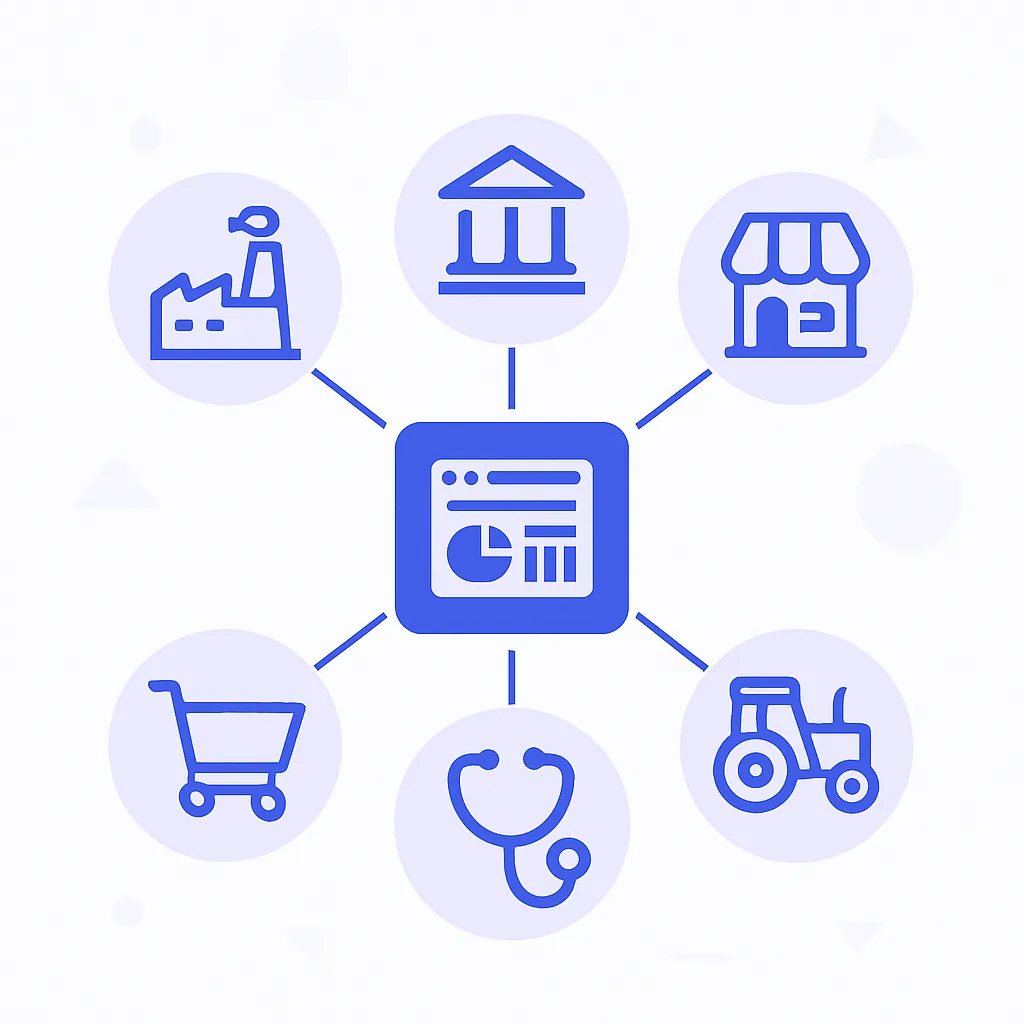
What is Horizontal SaaS? Horizontal SaaS refers to software that can be used by any business, regardless of industry. Think of it as the “one-size-fits-many” approach to software. Key characteristics: Industry-agnostic solutions Broad market appeal General business functions Wide user base Standardized features 👆 By the way, an interesting fact: The term “horizontal” in business…
-

Value Proposition: Definition, Examples & How to Write One
A value proposition is a clear statement of how your product solves a customer's problem, the benefits it delivers, and why they should choose you over competitors. It's your product's elevator pitch.…
-

Engagement Loop
What is an Engagement Loop? An engagement loop is a cycle of actions and rewards designed into a product that encourages users to engage repeatedly. It’s like a continuous feedback cycle where each action leads to a reward, which motivates more actions. 🔄 What makes it work: Triggers that prompt action Clear user actions Rewarding…
-

Product-Led Growth (PLG): Definition, Examples & vs Sales-Led
Product-led growth (PLG) is a go-to-market strategy where the product itself drives acquisition, conversion, and expansion, letting users try and adopt it with little or no sales involvement. Used by Slack, Zoom, Dropbox, and Canva.…
-

Product-Market Fit
What is Product-Market Fit? Product-Market Fit (PMF) means creating something people want so much they’re telling others about it! Think of it as the perfect match between your product and your customers’ needs 💝 It means: Your product solves a real problem Customers love using it They’re willing to pay for it They recommend it…