

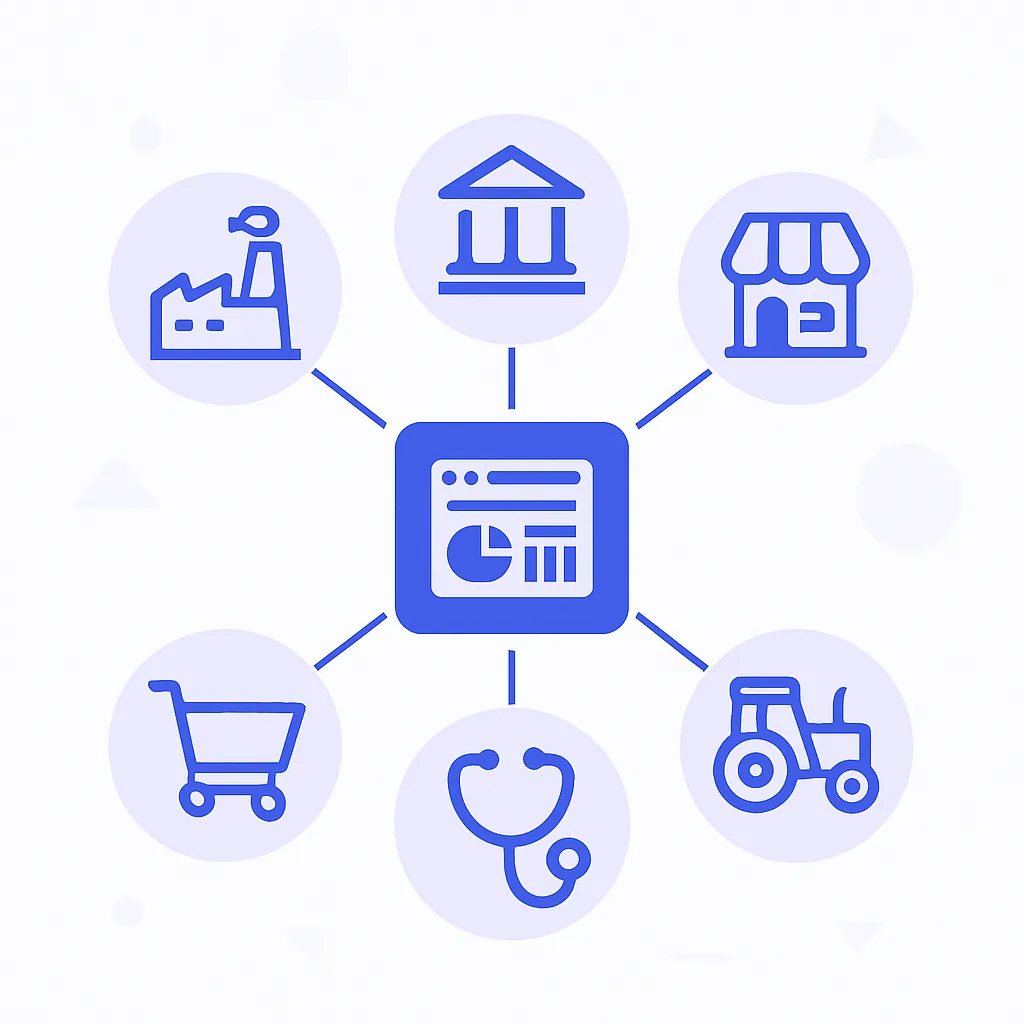
Horizontal SaaS is software any business can use regardless of industry, a "one-size-fits-many" approach like Slack, QuickBooks, or Google Workspace. It targets a large total addressable market with lower acquisition costs, the opposite of industry-specific vertical SaaS.
What is Horizontal SaaS?
Horizontal SaaS refers to software that can be used by any business, regardless of industry. Think of it as the “one-size-fits-many” approach to software.
Key characteristics:
- Industry-agnostic solutions
- Broad market appeal
- General business functions
- Wide user base
- Standardized features
👆 By the way, an interesting fact: The term “horizontal” in business comes from the idea that these solutions cut across all industry verticals, like a horizontal line crossing multiple vertical lines.
Why does Horizontal SaaS matter?
Market Opportunity 📈
- Larger total addressable market
- More potential customers
- Easier scaling potential
- Diverse revenue streams
Business Benefits 💰
- Lower customer acquisition costs
- More efficient development
- Easier standardization
- Better economies of scale
User Advantages 🌟
- Usually more affordable
- Proven solutions
- Regular updates
- Extensive integrations
Examples of Horizontal SaaS
Communication Tools
- Slack
- Used across all industries
- Universal communication needs
- Standard features for everyone
Project Management
- Trello
- Works for any team
- Flexible workflow management
- Industry-neutral approach
Financial Software
- QuickBooks
- Universal accounting needs
- Standard financial processes
- Cross-industry application
Horizontal SaaS vs Vertical SaaS
They’re different approaches to solving business problems.
Horizontal SaaS
- Serves all industries
- Broader feature set
- More flexible use cases
- Generally lower price point
- Faster market entry
- Example: Google Workspace
Vertical SaaS
- Industry-specific
- Specialized features
- Tailored solutions
- Usually higher price point
- Deeper industry knowledge
- Example: Epic Systems (Healthcare)
Horizontal SaaS FAQ
What is horizontal SaaS?
Software built for any industry, general business functions like communication, accounting, or project management, sold to a broad market. Examples: Slack, QuickBooks, Google Workspace.
What's the difference between horizontal and vertical SaaS?
Horizontal SaaS serves all industries with broad features and lower prices; vertical SaaS targets one industry with specialized features and higher prices. Horizontal wins on market size, vertical on retention.
What are examples of horizontal SaaS?
Slack (communication), Trello (project management), QuickBooks (accounting), and Google Workspace (productivity), all usable across any industry.
What are the advantages of horizontal SaaS?
A larger total addressable market, lower customer acquisition costs, easier standardization, and stronger economies of scale.