

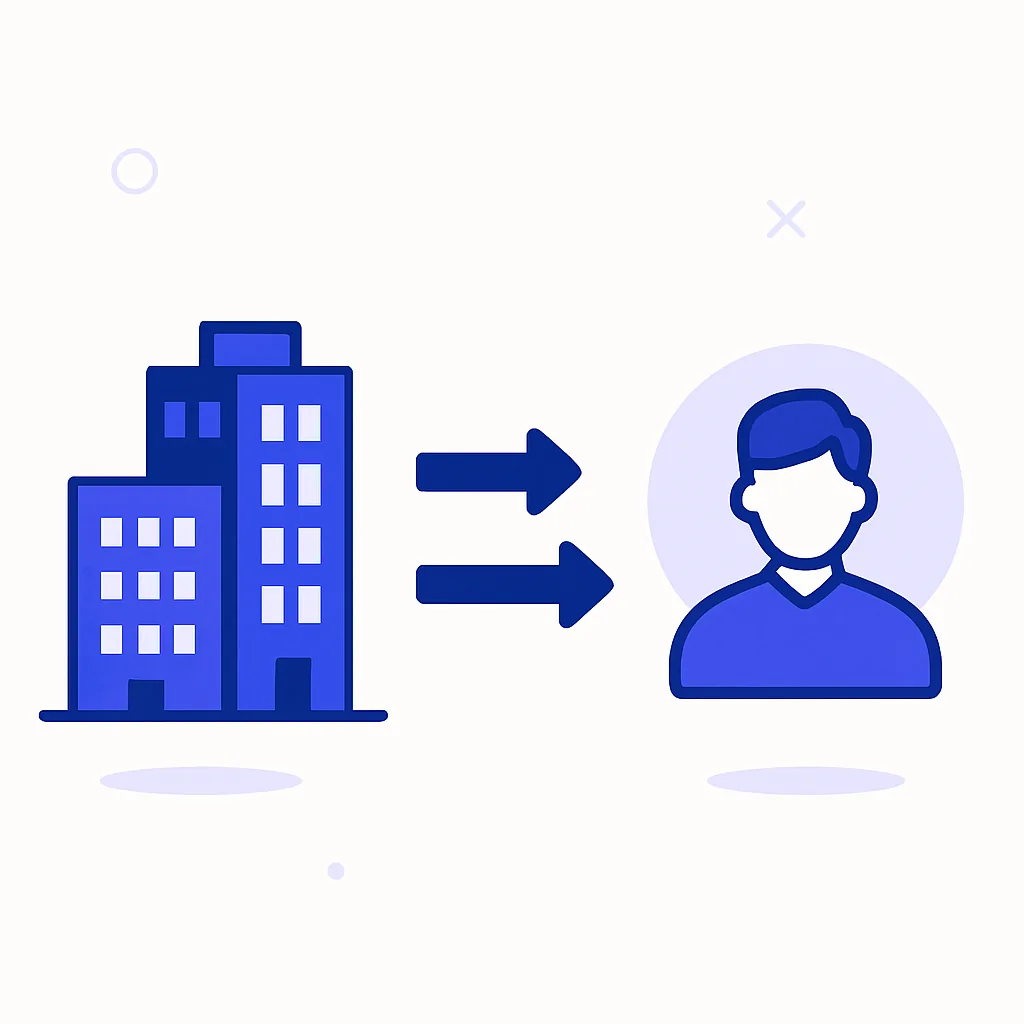
B2B2C (business-to-business-to-consumer) is a model where one business reaches end consumers through a second business, while keeping a direct relationship with those consumers. Examples: payment processors powering online stores, or insurers sold through employers. It blends B2B scale with B2C consumer connection.
What is the B2B2C Model?
B2B2C stands for Business-to-Business-to-Consumer. It’s a model where a business provides products or services to another business but also maintains a direct relationship with the end consumer.
Common Examples of B2B2C
- E-commerce platforms partnering with retailers
- Insurance companies working through employers
- Software platforms powering customer-facing services
- Payment processors enabling online shopping
👆 Fun Fact: While B2B2C might sound new, traditional examples have existed for decades, such as credit card companies partnering with banks to reach consumers.
Why B2B2C Matters
Understanding B2B2C is important because:
- It combines B2B and B2C benefits: You gain reach and scalability while connecting with end consumers.
- Enables market expansion: Partners provide infrastructure and access to new customer bases.
- Builds on relationships: Partners’ established trust helps attract customers.
- Encourages innovation: Collaboration often results in new solutions.
Key Characteristics of B2B2C
Dual Relationships
- Business partnerships
- Direct consumer connection
- Shared customer data
- Collaborative marketing
Value Proposition
- Benefits for both partners
- Enhanced consumer experience
- Combined brand strength
- Integrated services
Revenue Models
- Revenue sharing
- Commission structures
- Licensing fees
- Joint profit pools
Common B2B2C Strategies
White Label Solutions
- Software platforms
- Financial services
- Product customization
- Service delivery
Co-Branding
- Joint marketing
- Shared promotions
- Combined offerings
- Unified experience
Platform Models
- Marketplace solutions
- Service aggregation
- Integration APIs
- Shared infrastructure
Making B2B2C Work
Success in B2B2C requires:
Clear Partnership Terms
- Revenue sharing models
- Role definition
- Data ownership
- Customer service responsibilities
Strong Technology
- Smooth integration
- Data sharing capabilities
- User experience focus
- Security measures
Effective Communication
- Between partners
- With end consumers
- Brand alignment
- Consistent messaging
Challenges in B2B2C
Here are common hurdles in B2B2C:
Complex Relationships
- Partner management
- Brand alignment
- Revenue sharing
- Customer ownership
Technical Integration
- System compatibility
- Data sharing
- Security concerns
- User experience
Market Positioning
- Brand clarity
- Value proposition
- Partner conflicts
- Customer confusion
B2B2C FAQ
What is the B2B2C model?
A model where a business sells through a partner business to reach end consumers, while keeping a direct relationship (and often shared data) with those consumers, e.g. a payments provider inside a retailer's checkout.
What's an example of B2B2C?
Payment processors enabling online shopping, insurers offered through employers, e-commerce platforms powering retailers, and white-label software running customer-facing services.
How is B2B2C different from B2B and B2C?
B2B sells to businesses; B2C sells to consumers. B2B2C does both at once, partnering with a business to reach its consumers while maintaining a direct consumer relationship.
How do B2B2C companies make money?
Through revenue sharing, commission structures, licensing fees, or joint profit pools with the partner business.